Modern marketing should feel simple. Why doesn’t it?

Manago AI is the new name for SALESmanago. Read our rebrand story here


Something has gone wrong with marketing software.
Let’s be completely clear: not with marketing itself. Marketers today are more capable, more data-driven and more ambitious than ever. The problem is that the tools built to support them have not kept pace with the people using them.
Platforms have become more powerful, and as they have, the job has become surprisingly harder. Marketers now have more channels to manage, more data to interpret and more tools to connect. The technology stack that was supposed to simplify their work has become part of that workload. People who should be spending their time on strategy and creativity find themselves managing integrations, waiting for developers and digging through dashboards to find the insight they needed an hour ago.
On a personal level, this can be a source of everyday frustration. But at a strategic level, it points to a structural problem with how marketing software has been built, and how it now affects the business.
For years, the race in marketing technology was about capability. Who had the most features. Who could handle the most data. Who covered the most channels.
Those were the rules of the game in 2012.
For many, they still are. But they're not the rules that matter most anymore. The winners won't be the platforms with the most features. They'll be the platforms that help marketers achieve results fastest.
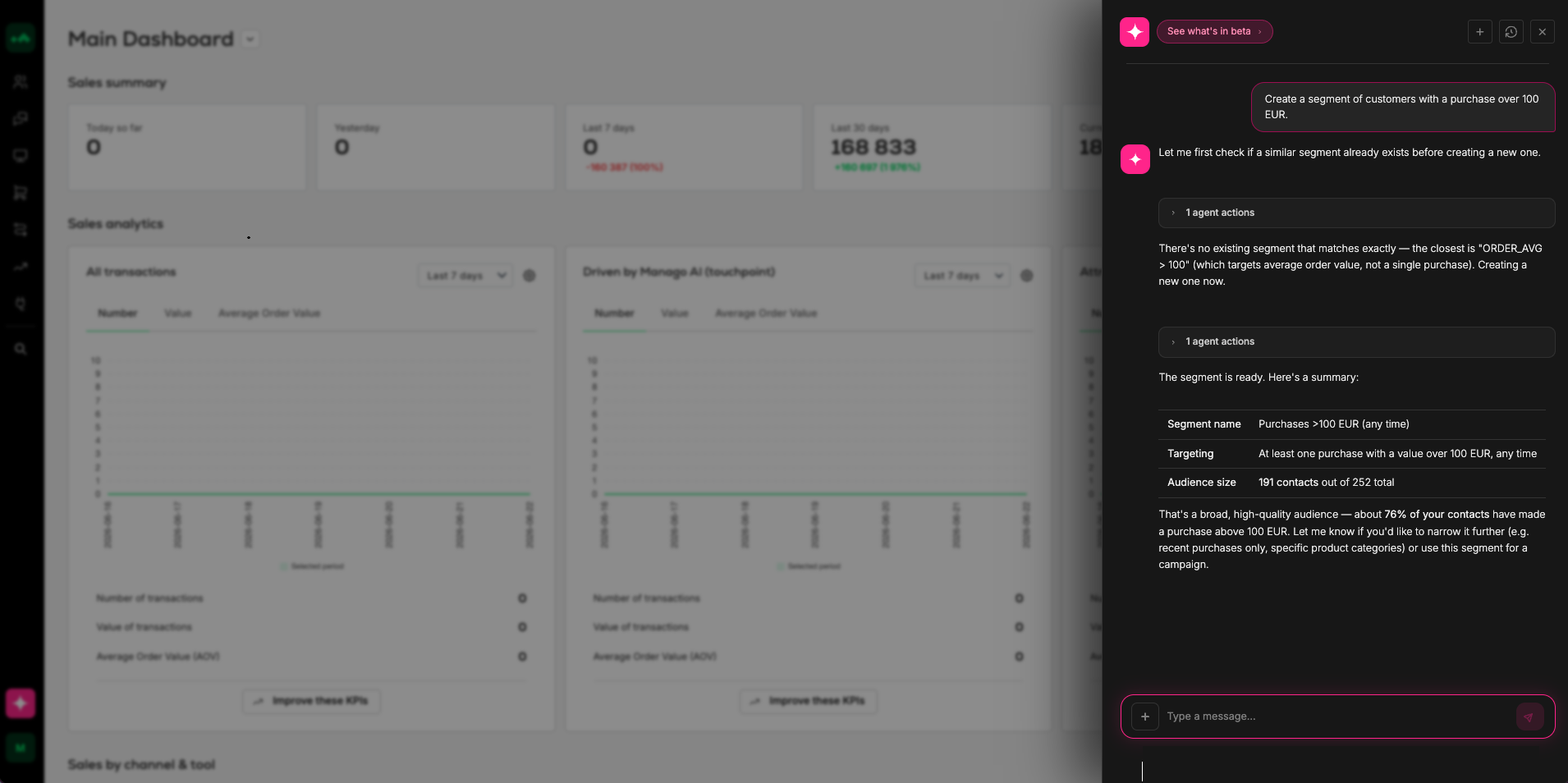
Marketers do not need more technology. They need technology that gets out of the way.
They need insights without building dashboards. Audiences without waiting for a data team. Campaigns without relying on IT. They need to move from idea to execution in minutes, not days.
A marketing platform should work the way marketers think. Not the other way around.
In fewer than four years, AI has moved faster than many analysts expected, and it is still accelerating. Its full impact on the global economy is hard to predict, but one thing is already clear: AI is raising the standard for every business. Customers expect more, and marketing teams are under greater pressure to show how their work contributes to revenue.
At the same time, technology now exists to change what a marketing team can do in a single day. Not by adding more tools to an already crowded stack, but by removing the distance between deciding what needs to happen and making it happen.
A marketer should be able to tell the platform what kind of campaign they want and get back something close to ready: the right audience selected, the copy drafted and the journey prepared to send. They should be able to see which customers are likely to buy before they make it obvious, and which ones are starting to drift before they leave. Every channel should respond to each customer in context, without the team having to connect every step by hand.
That is what we have been building. And that is what arrives on 29 June.
Modern marketing should feel simple. Soon, it will.

Want to be the first to try it out? Sign up for the exclusive free trial here!



Marketing automation has become harder to evaluate precisely because almost every platform now sounds the same. More AI, more automation, more intelligence, more promises to do more with less. Some of that represents genuine progress. Some of it is familiar functionality with a new label. For ecommerce teams, the useful question is not which platform has the longest ...
Read more
At some point, usually in a meeting that was supposed to be about something else, someone asks a very simple question: how many customers do we actually have?Finance checks the order system. Marketing checks the email database. The numbers do not match, and the gap is too large to dismiss as a reporting quirk.
Read more
You have more customer data than you have ever had. It is sitting in Shopify, in your email tool, in the helpdesk, in your ad accounts, in the POS system at the till. Literally more than you know what to do with it. The problem is that none of it is in the same place, so the same shopper shows up as different strangers depending on which platform you happen to be loo...
Read more